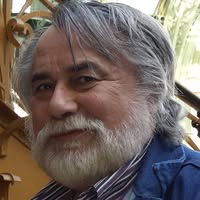
Daniel
Lepage
For nearly three decades, he transformed the "Informatique Pour Tous" department into a sanctuary where technology served humanity. He didn't just teach code; he taught us that true innovation lies in empathy, transparency, and lifting others up.
Beyond Machines, Toward Light
Digital Justice
"Technology must liberate, not alienate." He created 24/7 open labs to ensure disadvantaged students had equal access to computing power—a radical act of social justice in the 90s.
Human-Centric IT
He pioneered "Lexicometry" and "Art Computing," proving that computers could serve poetry, linguistics, and ethnology as deeply as engineering.
The Gift of Responsibility
He didn't just hire students; he made them ambassadors. By entrusting us with teaching roles, he turned learners into leaders and colleagues into family.
The History of IPT
Full Transcript: The Revolutionary Pedagogy of Paris 8
[0:00] My path is a bit strange, but before being a deputy, I was at CNRS.
[0:04] I arrived at Paris 8, I believe, in '86.
[0:07] It was exactly the year the Ministry created "Informatique pour tous" (IPT).
[0:16] When IPT arrived at Paris 8, like in all faculties, no one knew what to do with it.
[0:22] With Domichel, who was then director of the first cycle (not yet president), we made a decision.
[0:30] We decided to create a service dedicated to students, ensuring equipment would never just disappear or sit idle.
[0:40] The second question was: what are we going to implement?
[0:44] For humanities students, not exact sciences. That was the second part of the story.
[0:54] Then we started looking at pedagogy. What kind of teaching methods could we use in a humanities faculty so that computing would actually benefit the student in their studies and future work?
[1:13] A lecture course followed by practical workshops—this was certainly the most revolutionary part of the history.
[1:22] An OSCE or a unit of value can only be taught by a tenured teacher, not someone who isn't on staff.
[1:29] So it was the tenured teacher giving the lecture and assigning grades, with a monitor behind them running the practical sessions.
[1:39] To give you a little story: when we started IPT, the first thing we heard at Paris 8 was that it would never work.
[1:46] That it wasn't possible.
[1:48] We actually studied all the courses across Paris 8 and every department, asking: "Can we do computing in this department?"
[1:59] "And how does computing become useful for this specific department?"
[2:04] That's how we started doing art courses back then.
[2:10] In the very first Chinese word processing course, we dared to do lexicometry courses, econometrics courses, etc.
[2:23] Because we tried to cover the full spectrum of Paris 8 regarding the use of computing in student life.
[2:33] And it worked.
[2:35] Strangely enough, it worked.
[2:36] We must have been the first—and I'm sure we were the first and remain the only ones—to maintain a truly pedagogical IPT.
[2:44] That is to say, paradoxically but truly, within IPT teachers were actually giving courses, not just providing a collection of machines for students to use.
[2:58] The great advantage we had over what the Ministry had done previously was that the application decree in the Official Bulletin gave us two extraordinary things.
[3:10] First, it gave us operating credits—meaning we could renew equipment, which was absolutely central.
[3:19] Second, it gave us credits to pay monitors—a monitoring system.
[3:24] This was also very innovative; we hadn't had that until now.
[3:28] Without that, I think IPT would have died, because almost no faculty would have taken from its own budget to run something it didn't understand.
[3:38] Resources evolved because IPT took root. After multiple discussions, meetings, etc., departments began to understand the benefit of sending their students to IPT.
[3:58] So, in a way, IPT really became embedded in the faculty.
[4:02] When the Ministry stopped earmarking funds for IPT, the Faculty immediately put money back into IPT, equivalent to the Ministry's contribution, so we continued.
[4:12] Because at the time, Demichel was president, and she had created it—so it was hard for a president to dismantle what she had created.
[4:23] It's rare.
[4:24] It happens, but it's rare.
[4:27] The overall problem of installing something innovative in a university—something not well understood by everyone, or very envied—is that having your own budget makes you envied.
[4:45] Yes, it's very pretentious, but yes—I think it succeeded because it adapted, because we made it evolve.
[4:52] In small details: as soon as we created IPT, we implemented two things immediately.
[4:58] First, the notion of counter-power—meaning nothing was signed without a second person signing.
[5:04] Second, the notion of surveys.
[5:08] We immediately conducted surveys among both teachers and students.
[5:16] Thanks to that, I think IPT was able to update itself permanently.
[5:23] In particular, this allowed it to enter the C2I framework very quickly.
[5:28] Why?
[5:29] Because we had already done self-training before, we had already done self-service—which was also an innovation—so we had a significant pedagogical background.
[5:45] It was absolutely essential to allow students to practice on computers, and the fundamental idea was to eliminate inequalities—to allow disadvantaged students or those with difficulties to access computers 24/7.
[6:05] From the beginning, we created a self-service lab open roughly from 9 AM to 8 PM.
[6:09] And that too was innovative.
[6:11] In any case, for our audience, I sincerely believe so.
[6:15] Because we've been through...
[6:18] IPT has now existed for 30 years, if I'm not mistaken.
[6:22] If we average 6,000 students per year, that's quite significant.
[6:28] So those people definitely learned something.
[6:31] Yes, it's a conviction that allowed people to access technology they might not have been able to access elsewhere.
A Life of Service & Innovation
CNRS & Early Research
Technician at IN2P CNRS. Built foundational expertise in scientific computing before entering academia.
PhD in Computer Science & Humanities
Université Paris 7. A rare dual specialization that would define his future approach to digital education.
Director of IPT, Paris 8
Led the "Informatique Pour Tous" department for 28 years. Created the "Counter-Power" governance model and continuous feedback loops with students.
Mentorship Era
Guided a new generation of international students, including Saeed Rahmanipour, transforming them from students into teaching assistants and ambassadors of his vision.
Retirement & Legacy
Retired but never forgotten. His methods continue to influence digital humanities education across Europe.
Proof of Partnership
Official university records confirm this unique relationship. In April 1995, the Service des Traitements certified my role as "Chargé d'Atelier Moniteur IPT" and "Conférencier Étranger", paying me tax-exempt stipends for teaching practical sessions. By March 1996, Director Nicole Meyer attested to my completion of the Maîtrise d'Informatique with 1,050 hours of specialized training under Daniel's supervision. These are not just papers; they are the forensic evidence of a mentor who bet on his students.
Dear Daniel,
Rereading our old exchanges and seeing your wishes for 2023, a wave of nostalgia overwhelmed me. I wanted to write these few words to tell you how much I miss you.
The days spent by your side, between the corridors of IPT and our passionate discussions, remain engraved in my memory as one of the most precious periods of my life. You were far more than a director or a professor to me; you were an exceptional mentor and, above all, a true friend whose benevolence and wisdom shaped my path.
You gave me the responsibility to teach, making me an ambassador of your vision. That trust changed my life.
I hope from the bottom of my heart that health and serenity accompany you every day. My greatest wish is that one day, destiny allows me to find you again and to show you, in person, all the gratitude and affection I hold for you.
ERIC
Dear Daniel, friend of dawn and knowledge,
You saw in the code far more than a simple mirror.
Far from cold circuits and the silence of machines,
You sought a soul, a human and divine warmth.
At Paris 8, when the world still hesitated,
You opened the doors to a new treasure.
Not for the elites, nor for those who already knew,
But to offer everyone their own clarity, their own brilliance.
"Informatique Pour Tous" was not a vain word,
It was your promise of equity, your noblest gift.
You wove the link between technique and heart,
So that the humanities student could find their own value.
I remember the days when you guided my steps,
Far more than a director, you were there, right beside me.
Your rigor was gentle, your wisdom a burning lighthouse,
And in your eyes shone the pride of a father, of a loving mentor.
Today, time passes, but nothing fades,
For you have engraved in me far more than a simple trace.
You taught me that true technology is the one that liberates,
That reaches out to the weak and makes every mind prosper.
Dany, my old friend, may life be sweet to you,
May serenity envelop you like a warm lawn.
My heart keeps alive the fire of this friendship,
Until the blessed day when I can, finally, thank you.
Science Meets Humanity
PhD (Thèse)
Informatique et Science Humaine
Université Paris 7
IN2P CNRS
Technicien Chercheur
National Center for Scientific Research